Diwali
On this page
Day Before Diwali - Preparations
- Clean the entire house
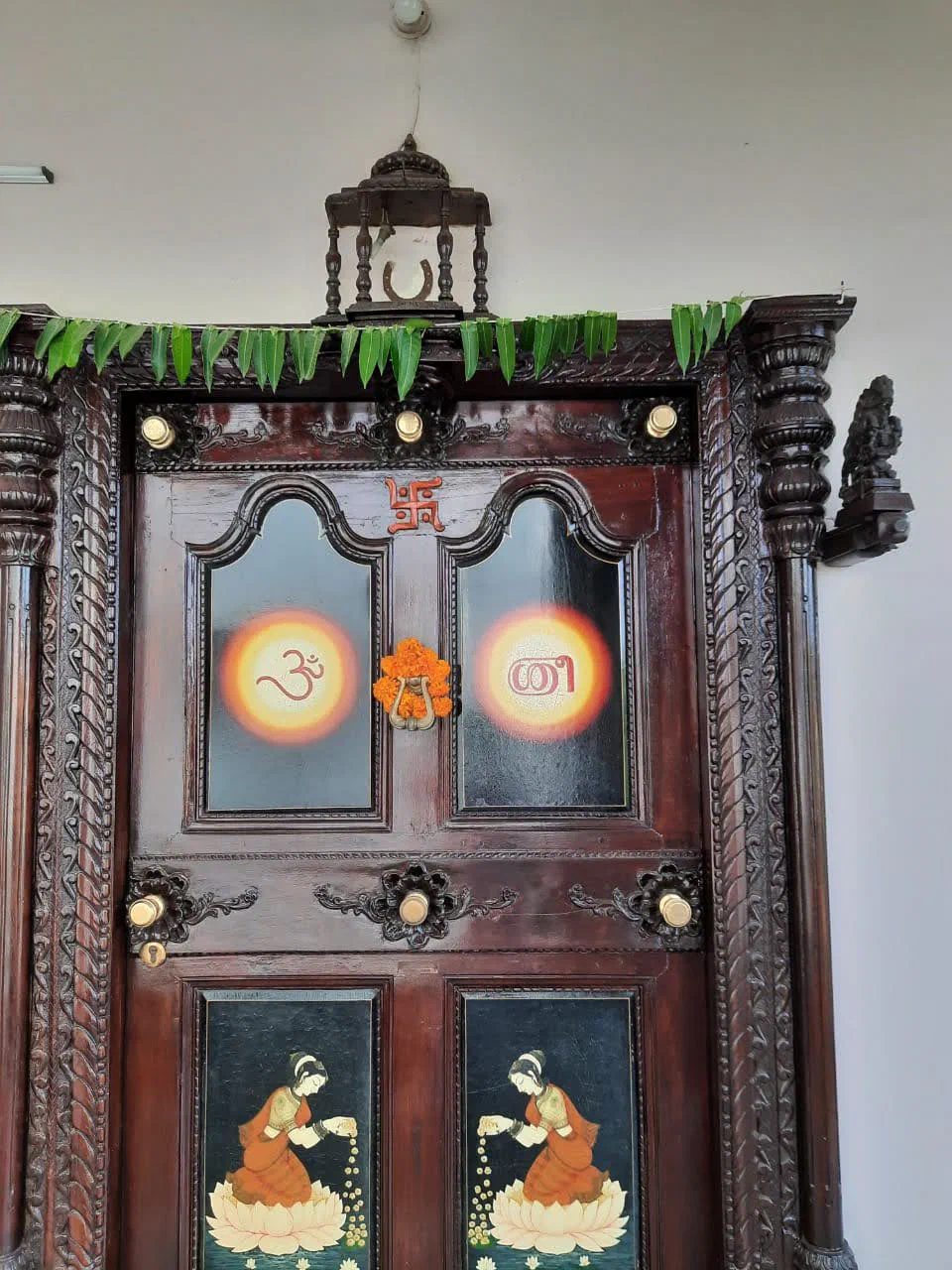
- Tie mango leaves at the entrance and puja room
- Prepare a palagah (wooden plank):
- Draw a kolam on the palagah.
- Place a veshti or towel on it.
- Keep new clothes on top of it.
- Draw kolam in the puja room
- Prepare the valak (oil lamp):
- Fill with oil.
- Place a new thiri (wick).
- Place a few crackers on a separate palagah, away from the valak.
- Prepare bakshanams a day or two before diwali. (Sweet + Karam) - like thengol, muruku, mysore paak, 7 cup cake, etc
- Keep valaks/ diyas ready which is to be kept around the house the next day
On Diwali Day
Early Morning Rituals:
- As soon as you wake up, light the valak.
- In the puja room, keep:
- Homemade bakshanam (snacks/sweets).
- Diwali leghyam (herbal digestive paste) (mentioned below or click to open recipe) .
- Prepare the oil for head application:
- In a pan, warm 2 tbsp sesame (til) oil with ¼ tsp peppercorns.
- Transfer to a small cup and place it in the puja room.
- Before applying oil, apply kumkum on forehead and take a bite of a small portion of bakshanam.
- An Elder of the house applies the oil:
- On the head and cheeks.
- While applying, sing “Gowri Kalyanam Vaibhogame”.
- Cheeks application is a symbolic ritual to avoid being born as a monkey/donkey (“Koranga porakakudadhu”).
- Sit on a palagah (with kolam) facing East to apply oil.
- If no palagah, sit on a mat – do not sit directly on the floor.
- Take a headbath
- Wear new clothes that was kept on the palagah.
- Put a nice big kolam at the entrance along with Kaavi (Red ochre powder)
- Burst crackers to mark celebration
Food Guidelines for Diwali Day
- Strictly avoid onion and garlic.
- Breakfast is usually Idly, sambar/ chutney
- Prepare paruppu-based items (dal-based dishes) such as:
- Sambar
- Mor Kuzhambu
- Rasam (must not be the only item)
- Curry
- Kootu
- Payasam / Kesari
- Vadai
- Avoid:
- Togayal (chutney-like dish)
- Having only rasam as the main dish
Evening Celebration
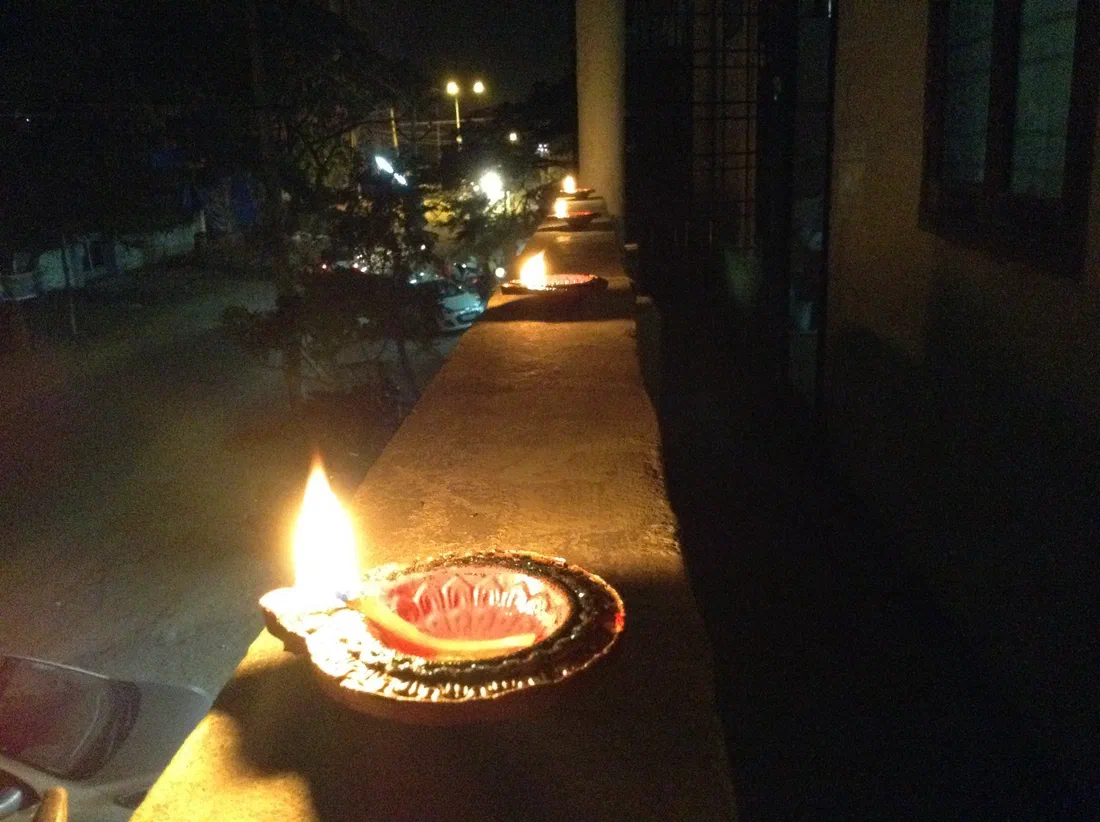
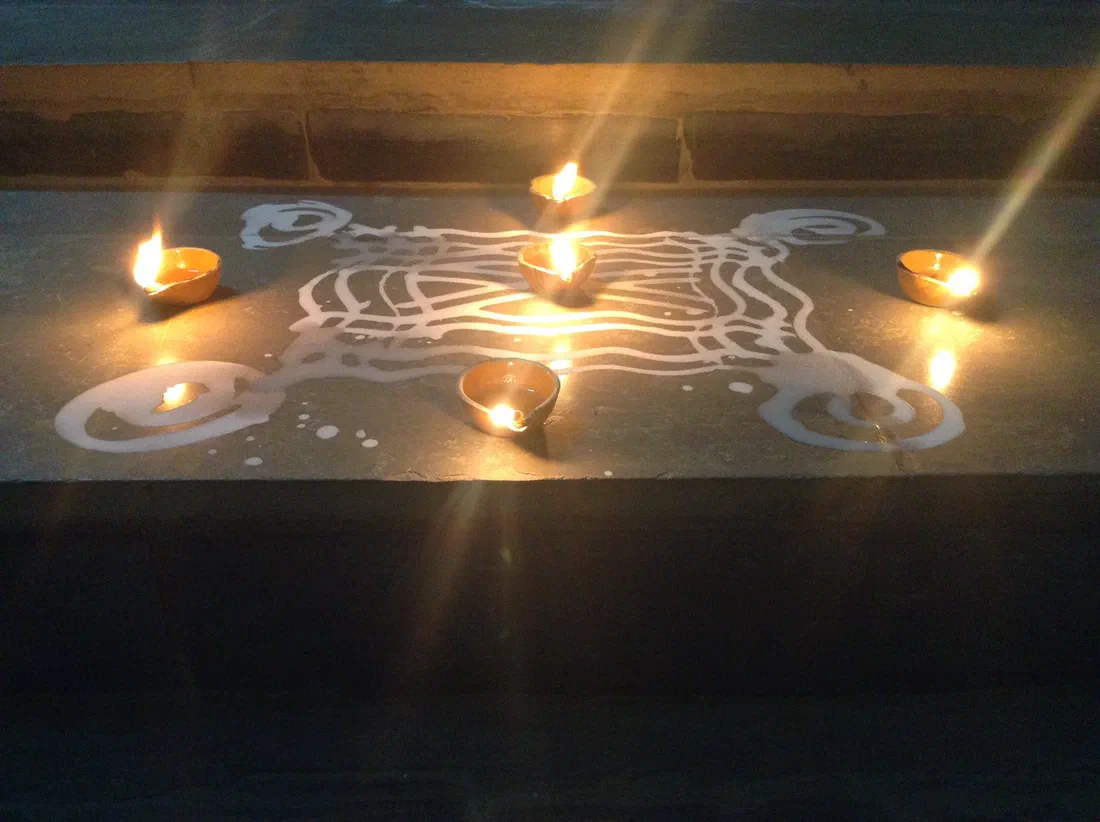
- Decorate the house with lights:
- Use diyas or electric lights.
- Light up all areas of the home
Diwali Leghyam
Ingredients** (Use any consistent measuring cup):
- Readymade Diwali Leghyam Powder – 1 cup
- Jaggery – 2 cups (same cup as powder)
- Note: You can reduce jaggery slightly if preferred, but do not increase.
- Ginger juice – ¼ cup
- To prepare: Grind fresh ginger with very little water and extract the juice.
- Ghee – 2 tablespoons
- Honey – 2 tablespoons
- Water – ¼ cup (for melting jaggery)
Preparation Method**:
In a pan, melt jaggery with ¼ cup water.
Strain the melted jaggery to remove dust, mud, or impurities.
Return strained jaggery to the pan and boil until it reaches a thick paste-like consistency
(just before “kambipaagu” stage — not string consistency, but thickened).
Mix the leghyam powder with ginger juice to form a lump-free paste.
Add this paste to the boiling jaggery and mix well.
When the mixture starts thickening slightly, add 2 tbsp ghee.
Do not boil too long after adding the leghyam powder – it will harden too much on cooling.
Once it starts to thicken (but still pourable), remove from stove.
Add 2 tbsp honey and mix well.
Let it cool completely, then transfer to a clean, dry container.
Storage Instructions**:
- Can be kept outside for 2–3 days.
- Refrigerate after that.
- Shelf life: Up to 3 months when stored properly.
Note:
- Til (sesame) oil is not used in this family recipe.